
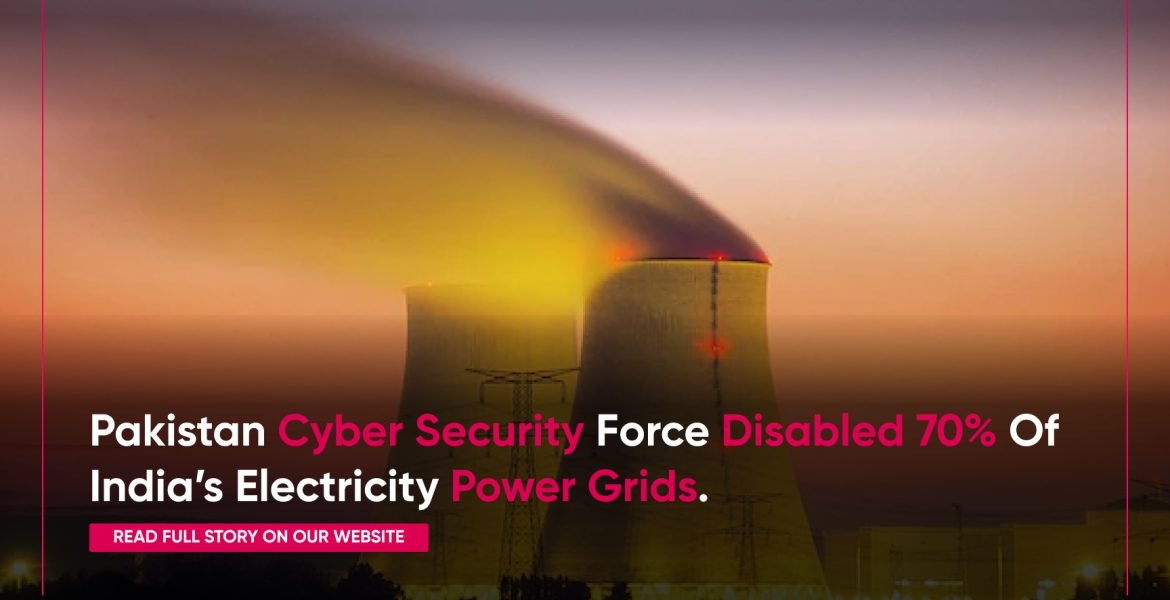
Pakistan hacks Indian Power Grid Stations: In an unprecedented and highly coordinated cyber assault, Pakistan’s cyber forces have successfully infiltrated and hacked India’s power grid stations, causing massive disruption across the country. The cyberattack was executed with precision, leaving India’s critical infrastructure incomplete chaos, as the power grid system collapsed. This incident highlights the growing threat of cyber warfare in global conflicts and the vulnerability of modern nations to intelligence-backed cyber operations.
The breach has caused widespread blackouts, affecting millions of citizens and crippling industries, governmental services, and military operations. Authorities are scrambling to restore order, while the origin of the attack has raised concerns over advanced tactics and sophisticated strategies that suggest a deeper level of preparation and execution.
Pakistan’s Strategic Cyberattack: The Genesis of the Breach
The recent cyberattack on India’s power grid occurred against the backdrop of escalating geopolitical tensions between India and Pakistan, which have historically been marked by conflict, competition, and rivalries. Experts believe this cyber assault is part of a broader strategy of asymmetric warfare, where cyber capabilities are leveraged as a low-cost yet highly effective means of inflicting damage on an adversary. By incapacitating India’s power infrastructure, the attack seeks to generate widespread panic and disrupt the functioning of critical services, throwing a wrench into the daily operations of the world’s largest democracy.

The attack’s sophistication and precision suggest a well-coordinated effort by Pakistan, which has long been investing in the development of its cyber capabilities. This could mark the beginning of a new phase in the India-Pakistan conflict, where traditional forms of warfare, such as military confrontations, are increasingly supplanted by digital warfare, which has the potential to cause far-reaching consequences without firing a single shot. Digital strategies of this nature allow states to inflict economic damage, cause chaos, and undermine the morale of a nation, all without direct military engagement.
In this particular case, the attack targeted several critical nodes in India’s electricity grid infrastructure, including key substations that supply power to major cities, industrial centers, and military installations. The sheer scope and precision of the attack caught authorities off guard, signaling the growing vulnerability of critical infrastructure to cyber threats. According to preliminary reports, the impact was severe, affecting an estimated 70% of India’s power grid, causing widespread power outages in several states. This massive disruption led to blackouts in urban centers, including New Delhi and Mumbai, which brought vital services to a halt for hours. Hospitals were forced to rely on backup generators, transportation networks were delayed, and communication systems were severely impaired, preventing the swift dissemination of emergency alerts and vital information.
The consequences of this cyberattack go beyond the immediate disruption of power. It has triggered a wave of concern about the vulnerabilities in India’s national security infrastructure. Critical sectors, including healthcare, transportation, defense, and communications, were forced to operate at suboptimal levels, underscoring the interconnected nature of modern systems that depend on a stable power supply. Additionally, the attack has raised alarm about the growing capabilities of cyber warfare as a tool for statecraft, offering adversaries a new avenue to engage in conflict that is less prone to international scrutiny and legal constraints.
Moreover, this attack has illuminated the vulnerability of global energy grids to cyber threats. India, like many other nations, has been gradually modernizing its power grid systems with digital tools designed to improve efficiency and monitoring. However, this reliance on interconnected, smart grid technologies has opened new doors for malicious actors to exploit weaknesses. While governments across the world have recognized the threat posed by cyberattacks on critical infrastructure, this breach serves as a harsh reminder that much work remains to secure these systems against ever-evolving digital threats.
This cyberattack has undoubtedly sent shockwaves through the security community, not only in India and Pakistan but globally. As tensions between the two nuclear-armed neighbors continue to rise, the cyber domain is increasingly becoming a key battleground, where the rules of engagement are still being defined. In this rapidly changing landscape, nations are being forced to rethink their security strategies and invest heavily in both defensive and offensive cyber capabilities. What was once considered a “new frontier” of warfare is now a central element of national defense, with implications that extend far beyond traditional military confrontations.
As the dust settles and investigations into the cyberattack continue, one thing is clear: digital warfare has arrived, and it is here to stay. The implications for future conflicts, both within the India-Pakistan context and globally, are profound. Whether this attack is an isolated incident or the beginning of a more sustained cyber campaign remains to be seen, but it has certainly demonstrated the devastating potential of cyberattacks on national infrastructure, prompting nations worldwide to bolster their cybersecurity frameworks in an era where warfare has transcended physical boundaries.
How the Attack Unfolded: A Tactical Analysis
Experts analyzing the cyberattack point to several key characteristics that underscore its precision:
- Advanced Hacking Techniques: The breach was carried out using state-of-the-art hacking tools, designed to infiltrate and manipulate the power grid’s control systems. Unlike simple malware attacks, this breach appears to have involved a multi-layered approach, suggesting the involvement of highly skilled cyber operatives backed by intelligence resources.
- Intelligence-Backed Strategies: It’s believed that the attack was not just an isolated cyber strike, but part of a larger covert operation. Sources suggest that Pakistan’s cyber units may have spent months, if not years, gathering intelligence on India’s power grid infrastructure. The sheer complexity and scale of the attack suggest that it was carefully planned and executed with precision timing.
- Power Grid Vulnerabilities Exposed: India’s power grid is heavily reliant on interconnected smart grid technology, which while efficient, is also highly vulnerable to cyberattacks. This attack has exposed the significant security gaps within these systems, raising alarms about the nation’s ability to protect critical infrastructure in an increasingly digital world.
- Swift Execution: The attack was designed to cause maximum damage in a short period. Within hours of the breach, large parts of India were without power, signaling the success of the cyber assault. The response from Indian authorities was hampered due to the severity and scale of the breach.
Impact on India’s Infrastructure and Daily Life
The immediate consequences of the cyberattack on India’s power grid were catastrophic. Major cities, including New Delhi, Mumbai, and Chennai, experienced prolonged blackouts that paralyzed daily life. Public transport systems, airports, and hospitals were among the first to feel the strain, as the sudden loss of power led to disruptions in communication, emergency services, and critical operations.
- Widespread Blackouts: More than 70% of India’s power grid infrastructure was compromised, resulting in widespread blackouts across key regions, affecting millions of people and leaving them without electricity for extended periods.
- Economic Strain: The attack also severely impacted India’s economy. Manufacturing plants, tech hubs, and service industries faced massive downtime, resulting in losses that could take weeks, if not months, to recover from.
- National Security Risks: The power grid attack didn’t just affect civilian life—it also left critical military installations vulnerable. India’s military relies heavily on constant power to maintain operations, and the breach posed significant risks to its preparedness and response time in the event of further escalation.
- Government Response: The Indian government has responded by deploying national cyber defense teams and calling in foreign cybersecurity experts to trace the origins of the attack. The National Investigation Agency (NIA) has initiated a probe, while the Ministry of Power has promised rapid recovery of the affected systems.
The Role of Cyber Warfare in Modern Conflicts
This cyberattack on India’s power grid marks a significant turning point in modern warfare, where cyber warfare is becoming an increasingly critical element of military strategy. Cyber capabilities allow nations to strike their adversaries in ways that are difficult to detect, attribute, or retaliate against. The anonymity of digital attacks makes it particularly challenging to pinpoint the origin, further complicating international response protocols.
As Pakistan’s cyber forces demonstrated, cyber attacks can cripple entire nations by targeting vital infrastructure like power grids, communication networks, and banking systems. The question now remains: Are global powers prepared to respond to these emerging threats, and how can countries defend against such sophisticated operations?
Conclusion: The Escalating Cyber Arms Race
The cyberattack on India’s power grid is a stark reminder of the evolving nature of global conflict. As nations invest heavily in cyber capabilities, it is essential for global policymakers to consider new frameworks for cybersecurity and digital warfare. In the case of the ongoing India-Pakistan conflict, this cyberattack is just the beginning of what could be a prolonged digital arms race.
India, now fully aware of the vulnerabilities in its cyber infrastructure, will likely strengthen its cyber defenses to prevent future breaches. However, as long as global geopolitical tensions remain high, we can expect more such attacks in the future—each one more sophisticated than the last.
This attack, targeting India’s critical power infrastructure, serves as a chilling reminder of the importance of securing cyber assets in a world where digital warfare is becoming as crucial as traditional combat.
Indian BJP Website Hacked by Pakistani Cyber Security Force.
In a significant cybersecurity incident, the official website of India’s Bharatiya Janata Party (BJP) was reportedly compromised in what experts are calling a sophisticated cyberattack by the Pakistan Cyber Security Force. According to initial investigations, the breach displayed signs of coordination and high-level tactics. While unverified reports on social media attribute the attack to a group allegedly affiliated with Pakistani cyber units, no official confirmation has yet been released by government authorities. The breach disrupted access to key sections of the website and raised serious questions about the digital infrastructure security of political organizations. Authorities have launched a detailed probe to trace the origin and methodology of the hack, and cybersecurity experts emphasize the growing threat posed by state-sponsored digital warfare in South Asia.